Overview: Beyond the Reefs
The Visayan Sea exerts a heavy gravitational pull on the global diving community, yet chaining an itinerary entirely to the ocean floor neglects the geographical realities of the island itself. Scheduled surface intervals force accumulated nitrogen from the bloodstream; they also carve out the operational space to map Cebu’s terrestrial extremes. A well-calibrated expedition balances the oceanic with the mainland—moving from the limestone fissures of Badian to the eighteenth-century stonework anchoring Cebu City. Splicing these land excursions between deep descents in Moalboal, Malapascua, and Mactan yields a far more muscular understanding of the province. A morning spent tracking the thresher sharks of Malapascua through low-light thermoclines transitions sharply into preparing the logistics for technical deep diving along the Mactan drop-offs. The topography above the high-tide line mirrors the severity and reward of the bathymetry below.
Adrenaline & Nature: Canyoneering and Coastal Escapes
A jagged mountain spine dominates the center of Cebu, funneling seasonal monsoon runoff into narrow gorges and scouring the rock into prime terrain for technical canyoneering. The municipalities of Alegria and Badian harbor the island’s premier canyon systems, sitting just a forty-five-minute drive from the dive operations of Moalboal. Descending the Kanlaob River demands three to five hours of sustained physical output, dictated largely by the pace of the group. The route requires pushing through heavy jungle canopy, swimming across turquoise basins stained by dissolved limestone, and skidding down water-polished chutes. The gorge eventually spits hikers out at Kawasan Falls, known for its massive multi-tiered cascades. Freefall jumps into deep freshwater catchments range from three to fifteen meters high. The provincial government locks the standard base rate for this circuit at roughly 2,100 PHP per person. This fee secures a licensed guide, a mandatory safety helmet, a personal flotation device, and a post-trek meal. Upgrading to a private, all-inclusive package with round-trip city transit alters the price, running anywhere from 3,600 PHP to 5,850 PHP; an additional environmental user fee of up to 100 PHP directly funds the ecological conservation programs of the Cebu Provincial Government’s.
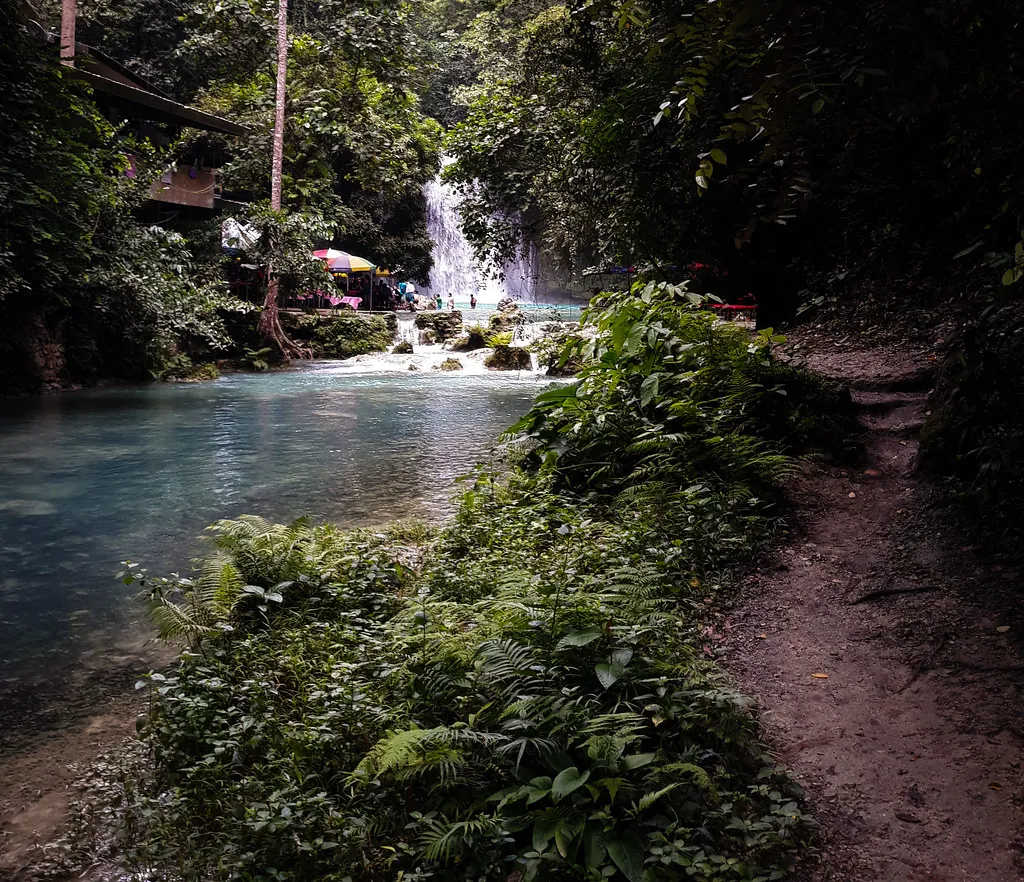
Saltwater encounters govern the economy further south. The coastal municipality of Oslob, specifically Barangay Tan-awan, draws massive international crowds for its morning megafauna phenomenon. Operating strictly from 6:00 AM to 12:00 PM, the whale shark watching operation guarantees pelagic proximity via heavily regulated, thirty-minute interaction windows. The experience is heavily commercialized and distinct from a natural, unbaited pelagic drift; it still acts as the primary financial engine for the southern province. Foreign tourists pay 1,000 PHP for the snorkeling interaction, while local Philippine residents pay 500 PHP. Securing standard fins costs an extra 100 PHP, and underwater action cameras rent between 350 and 500 PHP. Exiting the ocean pushes most travelers directly up the mountain to Tumalog Falls. A steep motorcycle (habal-habal) ride ferries passengers from the main highway to the drop-off point for 100 to 150 PHP, followed by a 50 PHP entrance fee. The local government shuts Tumalog Falls entirely to the public every second and third Wednesday of the month for strict ecological rehabilitation.
Divers hammering out back-to-back descents on the Moalboal sardine run eventually hit a wall; swapping the rocky, gear-strewn shoreline of Panagsama Beach for genuine sand becomes a biological necessity. Two kilometers of blinding white sand stretch across Basdaku, locally known as Moalboal’s White Beach, creating optimal conditions for swimming and tracking the sunset without visual obstruction. The broad, shallow sandy slope sharply contradicts the vertical coral drop-offs found a few kilometers north at Panagsama. Day-use access requires a nominal 25 PHP Environmental User’s Fee. Reaching this coastal isolation directly from the capital involves catching a non-air-conditioned Ceres Liner bus from Cebu City for approximately 209 PHP.
Heritage Walks: Tracing Spanish Colonial Roots

Cebu City anchors the archipelago as its oldest established urban center, bearing the architectural scars of the original Spanish settlement. Walking the downtown commercial grid reveals a violent collision between indigenous maritime trade and rigid European military doctrine. Fort San Pedro stands at the geographic and historical center of this district. Miguel López de Legazpi ordered its construction in 1565; it remains the oldest and smallest triangular stone bastion fort in the Philippines. Wood walls gave way to heavy masonry in the early seventeenth century as the garrison fortified against organized seaborne raids. The modern footprint covers 2,025 square meters, enclosed by walls measuring 6.1 meters high and 2.4 meters thick. The three primary bastions—La Concepción, Ignacio de Loyola, and San Miguel—now cast long shadows over a quiet museum holding Spanish colonial documents, heavy artillery artifacts, and weathered sculptures. The compound operates as a walled fortress against the chaos of the modern port outside its gates.
Understanding the complex oceanic currents of Cebu requires a hard look at its maritime history. The exact deep-water channels that dragged Spanish galleons to the Mactan shoreline now function as the primary staging ground for the country’s best dive liveaboards.
The heavy stonework of the military fort eventually yields to the spiritual absolute of the island: Magellan’s Cross and the Basilica Minore del Sto. Niño. An octagonal pavilion marks the precise coordinates of the first Christian baptisms in the archipelago, conducted in April 1521. The Basilica anchors the adjacent courtyard, its solid stone walls completed in 1740 after fire consumed its wooden predecessors. The structure guards the highly revered statuette of the Child Jesus, an artifact initially handed by Ferdinand Magellan to Rajah Humabon’s wife. Recognizing the immense religious gravity of this site, the Holy See officially designates it the “Mother and Head of all Churches in the Philippines.” Red smoke thickens the air in the crowded courtyard as devotees light candles and execute the rhythmic steps of the traditional Sinulog prayer dance.
Colonial religion transitions seamlessly into colonial commerce within the Historic Parian District. Early Chinese-Filipino merchants consolidated immense wealth here, controlling the economic levers of the local settlement. The Yap-Sandiego Ancestral House survived from the late seventeenth century, securing its status as one of the oldest residential structures nationwide. Hand-carved coral stones stack against pillars of ultra-dense hardwood molave. Further down the street, the Heritage of Cebu Monument dominates the plaza—a massive, tangled tableau of brass, bronze, and steel freezing the most significant events of Cebuano history in metal. The timeline jumps across the channel to Mactan Island, a landmass usually functioning as the initial stop for divers flying in and checking their equipment and safety gear. The Mactan Shrine, maintained under the authority of the National Historical Commission of the Philippines, marks the April 1521 Battle of Mactan. Local chieftain Lapu-Lapu decimated Magellan’s heavily armed forces in the shallows, pushing full Spanish colonization back by over forty years. Maximizing the daylight hours allows you to merge a visit to the historical shrine with a guided shore-entry scuba diving tour cutting along the adjacent Mactan coastline.
Local Markets & Highland Escapes
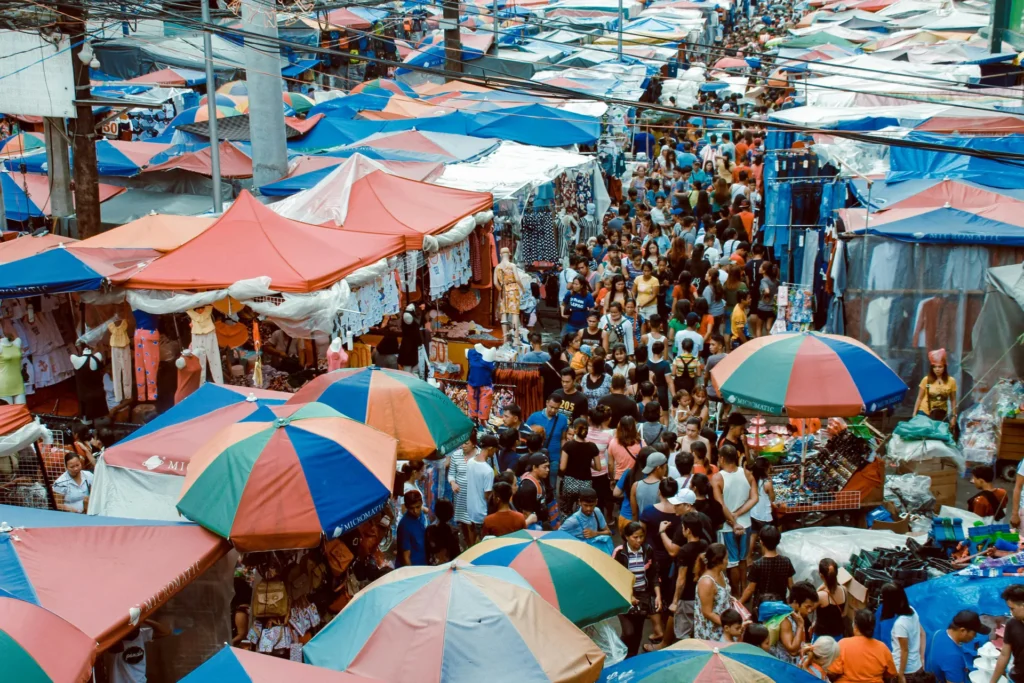
The logistical blood flow of Cebu pumps directly through its central markets. Carbon Market retains the title of the oldest and largest farmer’s exchange in Cebu City. The alleys deliver an absolute sensory overload; hanging butchered meats compete for space with mounds of raw tropical produce, hand-woven palm baskets, and pungent local spices. Commercial fishermen dump their daily catch from the surrounding straits hours before sunrise. Walking the wet concrete gives intrepid travelers an unfiltered look at the raw, unprocessed materials dictating Visayan commerce. The narrow, muddy corridors demand sharp situational awareness, but the resulting observation reveals the unvarnished mechanics of the local culinary scene.
Extracting a physical piece of the island’s identity requires a detour to Taboan Public Market, the undisputed “Dried Fish Capital of Cebu.” Stacks of danggit—salted, sun-dried rabbitfish—dominate the stalls alongside heavily flattened dried squid. The atmospheric salt content is famously aggressive. Pungent seafood aromas latch onto clothing fibers and hair within minutes, permanently marking anyone who enters the aisles. Veteran travelers strongly advise hitting Taboan only on your final transit to the airport, or packing a dedicated change of clothes in an airtight dry bag before boarding your flight. Surviving the massive olfactory strike yields the reward of acquiring pasalubong (souvenirs) at the most competitive, authentic rates available on the island.
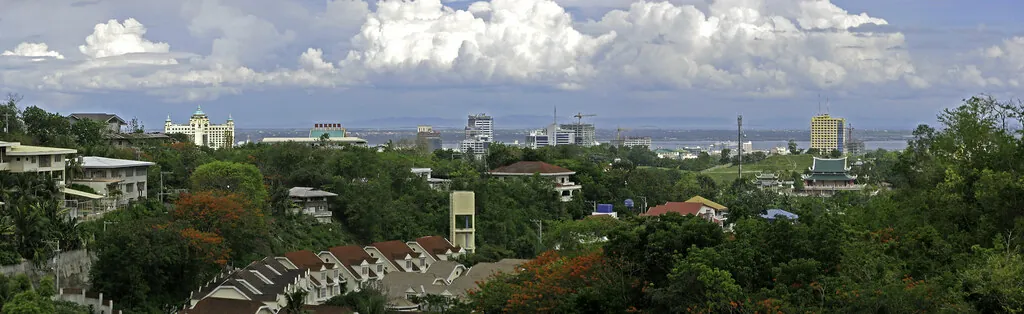
When the asphalt heat, diesel exhaust, and humidity of the commercial lowlands reach a critical mass, the population pushes up into the elevated ridges. Tops Lookout commands the Busay neighborhood, slicing through the haze to deliver sweeping, panoramic views of the dense Cebu City skyline, the heavy shipping traffic in the Mactan Channel, and the distant islands of Bohol and Leyte on clear days. The altitude strips the heat from the air, establishing a highly comfortable microclimate for a relaxed late afternoon. A short distance away, the Temple of Leah imposes Roman-style architecture on the tropical ridgeline—a sprawling tribute engineered by a local businessman for his late wife. Grand granite staircases scale the hillside, flanked by towering Doric columns and intricate bronze statues. The complex throws a bizarre, visually arresting disruption against the traditional bamboo and concrete dominating the lower city. The cold mountain air clears the mind before descending back to the coast to resume hunting the rare subjects detailed in our macro diving guide.
Transportation & Logistics for Land Days
Frictionless overland travel relies entirely on understanding the mechanics of local transit. Cebu maintains a massive public transportation grid, yet schedules bow completely to the immediate realities of traffic. Pushing south from Cebu City toward Moalboal or Oslob means relying on the bright yellow Ceres Liner buses staging out of the Cebu South Bus Terminal. The fleet splits into air-conditioned and non-air-conditioned units. Paying the slight premium for climate control prevents a standard three-hour journey down the southern coastal highway from devolving into a five-hour endurance test. Fares change hands manually; an onboard conductor punches a paper slip to lock in your precise destination and fare amount.
Mountain roads and the final, brutal inclines to locations like Tops Lookout or Tumalog Falls demand a different class of vehicle. The habal-habal—a motorcycle taxi—dominates these steep, winding grades. Fares require hard negotiation before you mount the seat. Fixed rates apply to established tourist routes, such as the 100 PHP run from the highway up to Tumalog, but operators frequently quote inflated numbers to foreign arrivals. Always request a helmet. Moving heavy underwater camera rigs or cumbersome guided tour equipment changes the calculus entirely; hiring a private car or van eliminates the exposure of public transit. The steep price increase buys secure, air-conditioned storage for delicate electronics while you hike or swim, neutralizing a massive security liability for traveling underwater photographers.
Logistical precision is the absolute difference between a frustrating transit day and a flawless surface interval. Factor in the intense midday heat and unpredictable coastal traffic when plotting your overland routes.
Arrival logistics hit immediately upon clearing customs at Mactan-Cebu International Airport. White metered taxis and ride-hailing applications like Grab pull directly into the designated arrival bays. Running a standard metered taxi from the terminal gates into the downtown historical district burns between 350 and 500 PHP. The final total fluctuates wildly depending on the severe congestion choking the older Mactan-Mandaue bridges; the newer CCLEX bridge cuts the transit time dramatically for an added toll. Pushing straight to the northern port of Maya for the Malapascua outrigger ferries often justifies booking private airport transfers to bypass the chaotic city center completely. Cross-referencing your transit window with our comprehensive guide detailing the best time and weather for diving mitigates the risk of the Habagat monsoon. Torrential rain shatters ocean ferry schedules and washes out mountain access roads without warning.
Conclusion: Crafting the Perfect Itinerary
Confining your geographic footprint to the dive boat and the resort bar limits the scope of the expedition. Cebu requires active friction; it demands exploration well beyond the reef. Weaponizing your mandatory off-gassing periods transforms empty hours into critical encounters. Dedicate the mornings to scuba diving in Cebu’s premier sites, then pivot the afternoons toward tracing centuries of violent colonial history or hiking through dense jungle river systems. Surviving the raw sensory overload of Carbon Market or executing a ten-meter jump into the Kanlaob River establishes a brutal, necessary physical counterbalance to the silent, weightless suspension of the deep. Map out the best spots for scuba diving, align them against these terrestrial landmarks, and assemble a master itinerary that measures the absolute full spectrum of the Visayan archipelago.