The Philippine archipelago dictates a harsh logic for those crossing its watery thresholds. Cebu’s topography scales with terrifying speed—dropping from the shallow fringing reefs of Moalboal straight into the sheer, 100-meter abysses that define Mactan’s eastern seaboard. Surviving and thriving in these extremes requires more than casual enthusiasm; it demands calibrated life-support, deliberate thermal strategies, and an unyielding respect for the depths. Logistics matter immensely out here, turning minor miscalculations into preventable footnotes rather than full-blown emergencies. For a sweeping look at the region’s top sites and shifting topographies, consult our Scuba Diving in Cebu, Philippines: The Ultimate Guide. To read the seasonal moods of the ocean before packing, study the Best Time & Weather for Scuba Diving.
Thermal Protection & Personal Gear
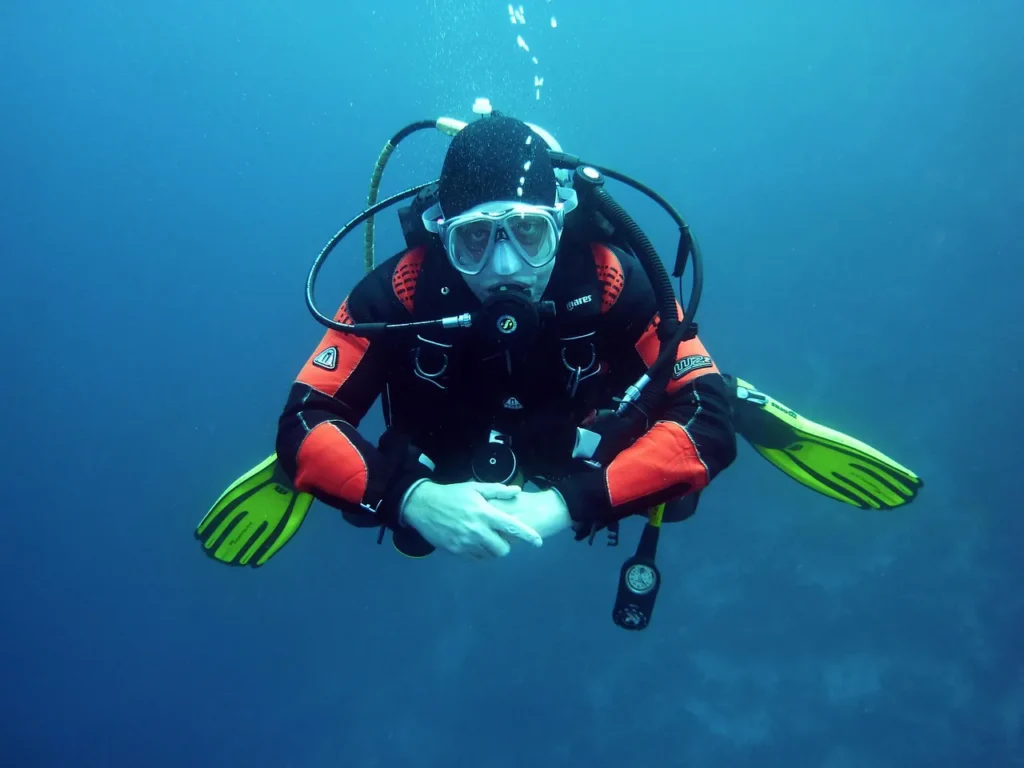
Surface readings frequently lull divers into a false sense of security. Cebu’s waters hold a steady 27°C to 29°C year-round, yet repetitive multi-day immersion strips core heat with quiet efficiency. Descend past 20 meters along the plunging walls of Pescador Island, and the ocean reveals its bite—sudden, localized thermoclines slice through the warmth, dropping the ambient temperature by several degrees in an instant. A 3mm full wetsuit anchors your body heat against this chill. Full-length neoprene also armor-plates the skin against the scraping edge of hydrocorals and the invisible sting of pelagic hydrozoans swept shoreward on the tide.
Aesthetics hold no currency below the waves; utility reigns absolute. A low-volume silicone mask, rigorously treated with defogging solution, guarantees a sharp line of sight to the microscopic ecosystems cataloged in Mastering Macro: Finding Cebu’s Smallest Wonders. Below the ankle, the jagged limestone reality of Visayan shore entries forces a specific choice in propulsion. Open-heel fins paired with 5mm hard-soled neoprene booties are essential. Attempting barefoot entries invites immediate, deep lacerations. Even a shallow coastal checkout, like the Cebu: Scuba Diving Experience beach entry in Mactan, demands heavy-duty foot protection to sidestep injuries long before your regulator clears the surface.
Hard-soled booties are non-negotiable in Moalboal. The extreme tidal shifts routinely expose razor-sharp fossilized coral beds that can terminate your diving itinerary before you hit the water.
Instruments & Critical Safety Accessories
Precision dictates survival when navigating these volatile underwater landscapes. Dive computers require strict programming to conservative decompression algorithms. This proves vital during the grueling multi-day schedules aimed at pelagic zones—such as the pre-dawn descents outlined in our Encountering the Thresher Sharks of Malapascua guide. Breathing Enriched Air Nitrox (EANx) pushes bottom time margins wider and curbs nitrogen absorption, assuming the diver carries appropriate certification from an internationally recognized agency like PADI or SSI. The ritual is immutable: personally analyze the gas mixture and log the oxygen percentage before throwing a strap over the BCD.
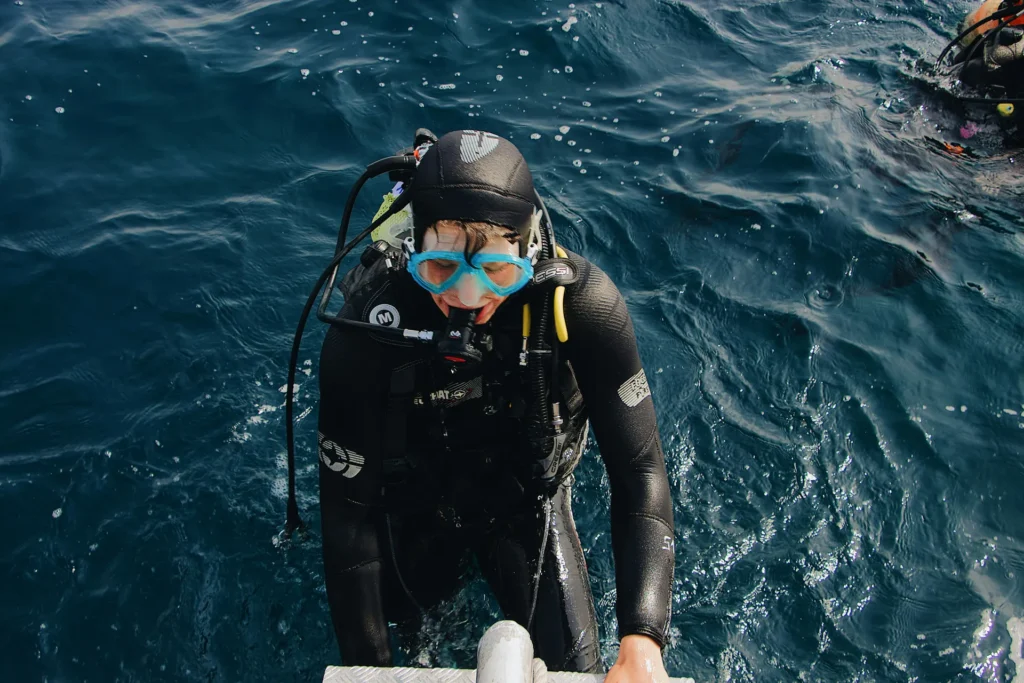
Breaking the surface carries its own distinct threats. The Visayan Sea operates as a heavy transit corridor for traditional motorized outriggers, known locally as bancas. These wooden crafts sit heavy and low, extending long lateral outriggers that slice the chop while twin engines generate a deafening acoustic wash, entirely drowning out the sound of ascending divers. Standard safety accessories become lifelines in this traffic. Every diver carries a Delayed Surface Marker Buoy (DSMB) and a high-decibel whistle; deploying the DSMB from a depth of at least five meters is an unbending rule prior to any final ascent.
Never breach the surface in Cebu’s transit corridors without deploying a DSMB. The heavy traffic of twin-engine outrigger boats requires proactive, high-visibility signaling to prevent catastrophic hull strikes.
Evaluating Operators & Renting Gear
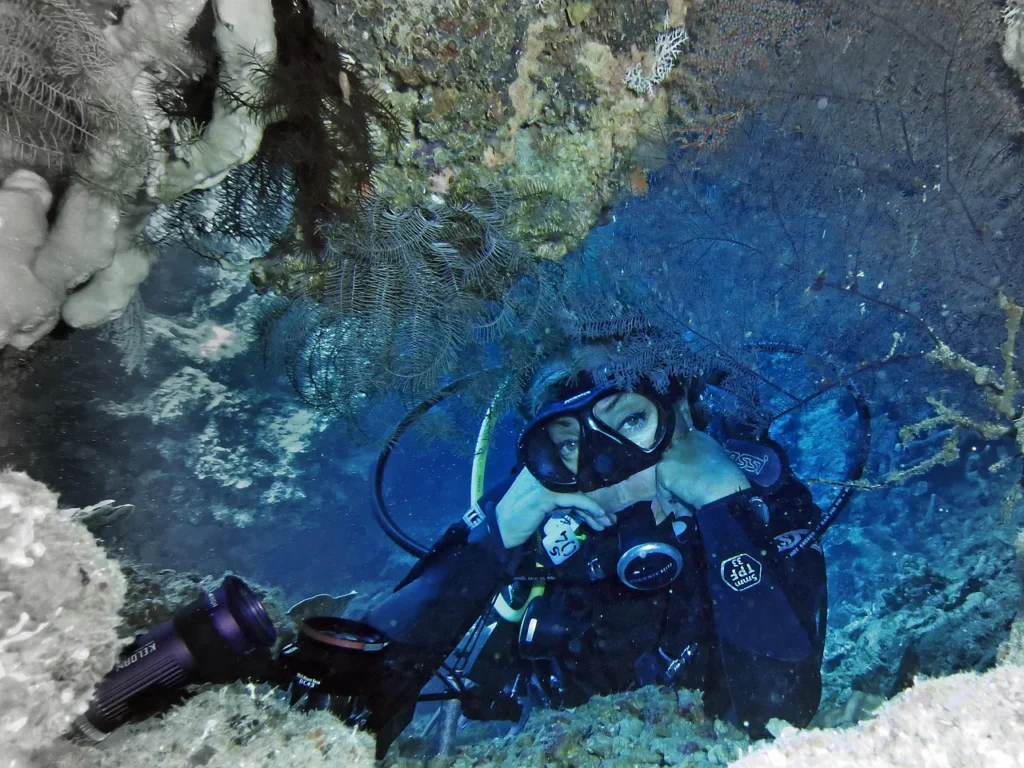
Finding an outfitter amid the sprawling dive centers of Cebu requires a critical eye. Premier operators anchor their practices in international training standards and the rigorous environmental codes enforced by the Philippine Commission on Sports Scuba Diving (PCSSD). Excellence leaves a paper trail. Look for strict four-to-one diver-to-guide ratios, exhaustive briefings dissecting localized current sheer, and impeccable compressor maintenance logs. Institutions like Thresher Shark Divers—running Malapascua operations since 2004 with fun dives at 2,875 PHP—and Cebu Fun Divers in Moalboal, staging shore dives for 1,700 PHP, consistently hit these uncompromising safety metrics.
Trusting a stranger with life-support apparatus invites unnecessary risk. Execute a tactile, granular inspection long before stepping onto the boat. A technician’s verbal guarantee means little at thirty meters down; methodical pre-dive scrutiny forms the primary bulwark against equipment failure in the deep.
- Regulators: Examine the primary second stage mouthpiece for bite-through tears. Run your fingers over the low-pressure hoses to detect micro-cracks near the crimps, then hammer the purge button to verify a violent, unobstructed blast of gas.
- Buoyancy Control Devices (BCDs): Orally inflate the bladder until drum-tight to expose any slow leaks. Manually cycle every dump valve and the low-pressure inflator mechanism to confirm they vent expanding air instantly without catching.
- Tanks & O-Rings: Scrutinize the cylinder valve O-ring for the slightest extrusion or rot. Crack the valve for a split second; the breathing gas must smell surgically clean, entirely devoid of heavy hydrocarbon or exhaust fumes.
Emergency Protocols & Medical Facilities
Surviving an adverse incident relies on immediate access to hard currency and medical infrastructure. Remote island outposts routinely run their ATMs dry, and rural clinics exact a punishing 5% surcharge on plastic transactions. Divers travel with thick stacks of physical Philippine Pesos—enough to buy out emergency terrestrial transport and secure initial physician consultations. This financial readiness extends to the Environmental User Fee (EUF) system. Paying these municipal taxes does more than fund reef conservation; it directly subsidizes the fuel and gear of local rescue squadrons.
Standard travel insurance crumples under the weight of a scuba casualty. Policies must explicitly state coverage for remote maritime evacuation and hyperbaric therapy. Underwriting from the Divers Alert Network (DAN) commands instant recognition across major Philippine medical hubs, tearing down bureaucratic barriers during a crisis. If the shadow of Decompression Sickness (DCS) falls over a dive—telegraphed by deep joint pain, localized numbness, or crippling vertigo—the victim requires the rapid administration of 100% emergency oxygen. Confirm the banca captain has lashed a fully pressurized, active oxygen cylinder to the deck before casting off.
Distance equals time, and time is tissue. Cebu maintains advanced recompression infrastructure, with hyperbaric chambers strategically anchored near the central dive hubs and the international airport. For the technical divers pushing trimix profiles into the abyss—explored further in Technical Diving: Exploring Cebu’s Deep Walls—calculating the exact surface transit to these medical lifelines remains an inseparable part of gas and risk planning.
| Facility Name | Geographic Location | Services Available |
|---|---|---|
| Cebu Doctors’ University Hospital | Cebu City (Central) | 24/7 Recompression, Full Medical Evaluation |
| Mactan Doctors’ Hospital | Lapu-Lapu City (Mactan Island) | Emergency Trauma Care, Initial DCS Stabilization |
| PCSSD Affiliated Clinics | Moalboal & Malapascua | First Aid, Emergency Oxygen Administration |
The physical toll of the deep lingers long after the gear dries. Post-dive physiology demands absolute compliance with “Flying After Diving” protocols, enforcing a mandatory 18 to 24-hour surface interval before a diver boards any aircraft lifting off from Mactan-Cebu International Airport. Ten degrees north of the equator, the sun wages a relentless campaign. Dehydration and heat exhaustion complicate the body’s ability to off-gas nitrogen. Combat this with aggressive fluid intake and deploy reef-safe sunscreens, shielding the epidermis without poisoning delicate scleractinian corals with toxic oxybenzone.
Grounded divers must fill these mandatory off-gassing hours carefully. The surrounding islands offer rich historical and culinary diversions, cataloged thoroughly in Other Things to Do in Cebu, Philippines. Those unable to resist the water before a flight might consider the Private Aquatic Discovery Helmet Diving and Snorkeling Adventure, but participation carries strict physiological boundaries. Snorkeling at the surface remains safe. Helmet diving—despite its extreme shallowness—involves breathing compressed gas and violates the non-negotiable pre-flight interval.
Mastery of these elements—calibrated gear, vetted captains, and an ironclad emergency framework—strips away the inherent risks of the ocean. It leaves only the raw, unfiltered gravity of the Visayan marine ecosystem waiting to be explored.